The family computer was usually somewhere inconvenient.
A desk in the den. A corner of the living room. A little office where your dad kept envelopes and a printer that shook the whole desk when it started working.
You pulled out the keyboard tray, moved whatever somebody had left on the mouse pad and sat down. Your sister would announce she needed a turn before anyone in your party had even died of dysentery.
Somebody else wanted to print something. Somebody needed the phone.
In many households, going online meant going to a particular place in the house. You could lose track of time there, but the rest of the household had ways of finding you.
Then, over several years and several birthdays, more of what you wanted to do became available behind your bedroom door.
Your Dad Could See Where You’d Been
The family computer offered a strange introduction to a supposedly limitless world. You could visit a website run by someone thousands of miles away while your mother folded laundry six feet behind you.
Your dad could open the browser history and see the sites you’d visited. You could try deleting it, which required remembering to do it and hoping nobody asked why the history was suddenly empty.
Private browsing didn’t become a standard browser feature until the 2000s. There was no incognito window to keep your browsing out of the family computer’s history. If you were exploring the web in the late ’90s, privacy might mean listening for footsteps.
And even if nobody checked the history, they could see the screen.
That arrangement could be embarrassing, restrictive and intensely annoying. It also kept computer use inside the ordinary traffic of the house. Someone asked about your homework. Someone wanted you to look at something. Someone stood behind your chair eating chips until you surrendered it.
Getting online required sitting somewhere other people could find you. A closed bedroom door offered no protection when the machine was downstairs.
Even if you already had a TV in your bedroom, using the internet could still mean coming out to the family desk. You had privacy for some things and an audience for others.
Getting Your Own TV Was a Promotion
The bedroom television had already shown you how much better entertainment could be when nobody else got a vote.
Maybe it was an old set passed down when the living room got a better one. Maybe you had rabbit ears and a handful of channels. Add a console and you could spend a Saturday morning playing without somebody asking for the remote.
There was real pleasure in that. Your room belonged to you a little more.
You could leave the controller where you wanted it. You could watch something your parents thought was stupid without listening to them explain why. The equipment might be worse than what was downstairs, but it was available on your terms.
By the end of the ’90s, having a TV in your bedroom was pretty normal: nearly two-thirds of American kids ages eight to eighteen had one. Getting online from that same room was much less common—only one in ten could do it in 1999.
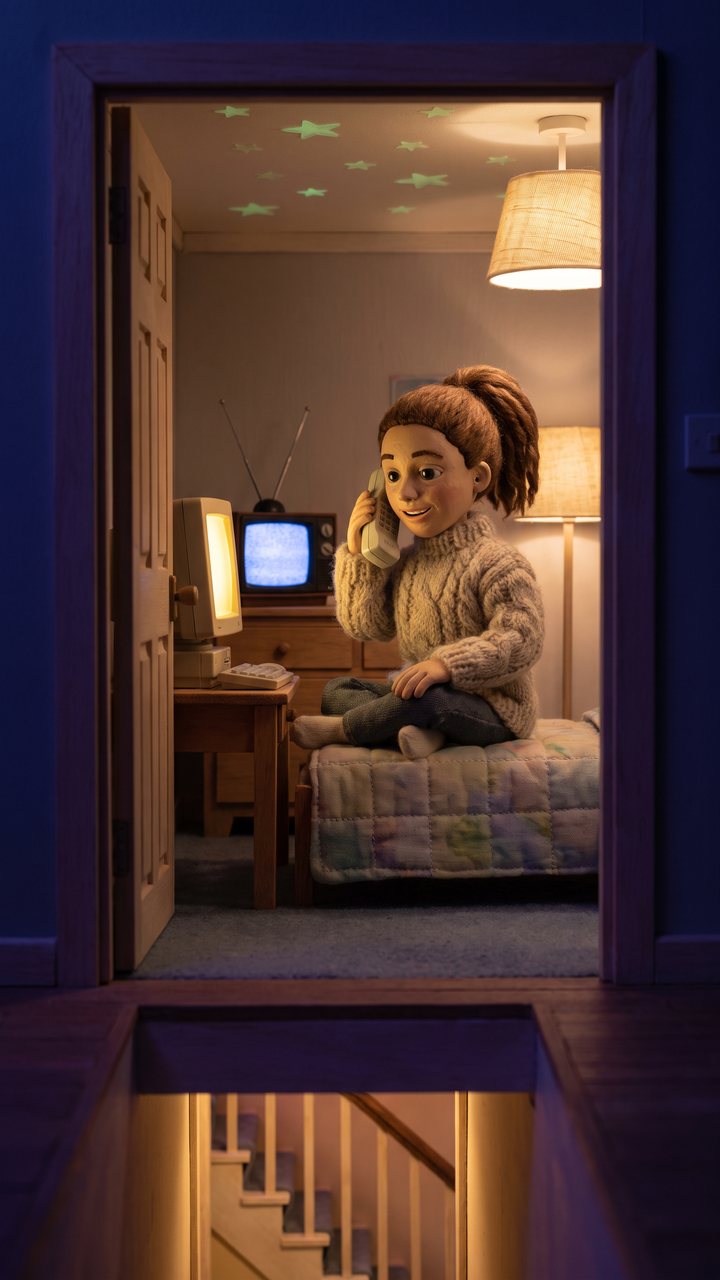
So you could play Nintendo upstairs without anyone asking to watch the Sunday morning news, but talking to your friends online still meant heading down to the family computer. Over the next decade, that started changing. By 2009, a third of kids had internet access in their bedrooms. The game, the music and the conversation could all happen behind the same door.
You Could Be Alone and Still Be With Your Friends
A computer in your room brought a different kind of company.
You could talk to a friend without a parent answering first. You could keep a conversation going while listening to music or pretending to do homework. A quiet room could contain a surprisingly busy evening.
You could hear someone calling from downstairs and yell back that you’d be there in a minute. There was always one more message to send before you signed off.
The door could be shut while several conversations were open. Someone from school was telling you what happened after you left. Another friend wanted to know whether you were coming over tomorrow. You were physically away from everyone and still involved in what they were doing.
That mattered, especially if the people you wanted to talk to weren’t nearby—or if school wasn’t somewhere you felt particularly understood.
It also meant you no longer had to pass through the house to find something to do. The conversation, the game and the music could all be waiting where you already were.
Sometimes you shut the door because you wanted to be alone. Sometimes you shut it so you could talk to your friends without your family listening. From the hallway, both looked the same.
A friend making you laugh from another town is company. An evening spent watching other people appear to have a better time can feel very different.
The room doesn’t tell you which experience someone is having. Neither does the fact that the door is closed. A teenager could spend hours alone listening to CDs before there was a computer in the room. Another could use that computer to find people who shared an interest nobody at school understood.
What changed was how much could happen without opening the door.
Then Everything Moved Onto the Bed
A television stayed across the room. A desktop computer kept you at a desk.
The phone came under the covers.
You could watch, read, play, shop and talk without getting up. You could finish one thing and start another with almost no interval between them. Getting into bed no longer required leaving the evening’s entertainment behind.
That makes “I’m going to bed” a less useful description of what happens next.
The old equipment at least gave the evening a few physical steps. You saved the game, shut down the computer or turned off the television. The phone could stay in your hand through all of that. You could set it down, remember something you wanted to check and pick it up again.
Sleep research has picked up on something familiar: the evening can keep going long after you’ve climbed into bed. Gaming, answering messages and switching between apps can push sleep back while you’re lying in the place you used to go when the day was over.
Sometimes the problem is very ordinary: you’re tired, you’re already lying down and there’s still something you want to finish.
One more video. The reply you’re waiting for. A game that would be inconvenient to stop right now.
The People Downstairs
Nobody needs to romanticize being kicked off the computer or losing control of the remote. Having your own space was good. Being able to find your friends there was good, too.
But the shared equipment created encounters you didn’t have to choose.
You walked into the living room to ask for a turn and stayed to watch the end of something. You called a friend and spoke to their dad. You finished at the computer and went looking for a snack, passing whoever was sitting at the kitchen table.
Those encounters weren’t always meaningful. Sometimes your brother just called you an idiot.
They happened, though. Using the house put you in one another’s way.
Someone might ask you to carry something upstairs. You might stop to tell your mother what a teacher had said. You might sit on the arm of the couch for a minute and end up watching the rest of the movie. None of it required making plans to spend time together.
Now those moments are easier to bypass. That doesn’t establish how close a family is, or whether a person is lonely. It does leave more of the decision to you: keep watching, send another message, or get up and see who’s downstairs.
At the old computer desk, finishing meant pushing the chair back.
You still had to go somewhere.