The library was usually a place to keep your voice down. Then the book fair arrived, and someone opened a store in it.
Rolling cases unfolded against the walls. Tables filled the floor. Posters hung where there weren’t usually posters. You wanted to look at everything, and your class got time to browse.
Other school fairs meant following a parent past knitted ornaments and jars of jam. This one had Goosebumps, sports cars and a pen with six colors. Nobody expected you to appreciate a handmade wreath.
There was money in your pocket. Actual spending money, folded into an envelope or pressed into your hand before school. A parent might specify that at least some of it should go toward a book. That seemed reasonable before you saw everything else.
The flyer went home beforehand, giving you time to circle things and make a case for more money. You studied it on the kitchen table like the choices required preparation. By the time your class lined up to go, you could already picture what you wanted. Then the doors opened, and there were things the flyer never gave you a chance to consider.
You entered with a plan. The first table complicated it.
Everything Was Worth Looking At
The book fair understood that a kid could develop an immediate need for something that didn’t exist in their life thirty seconds earlier.
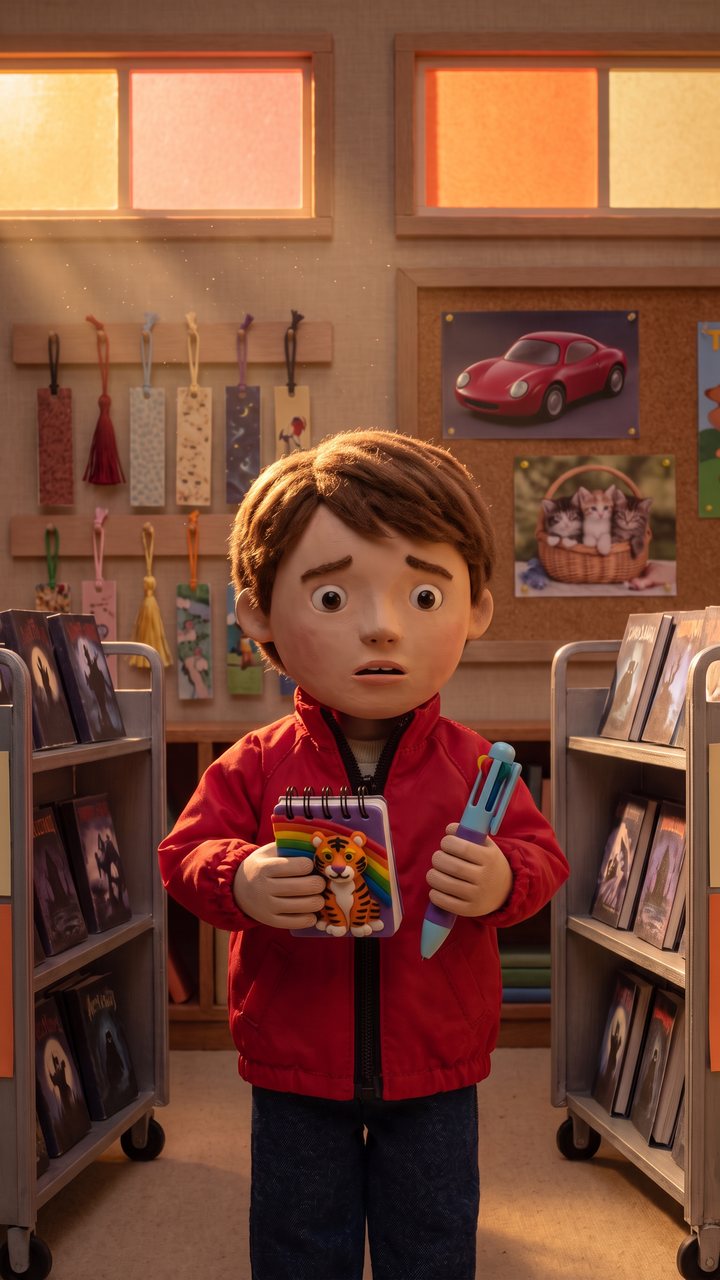
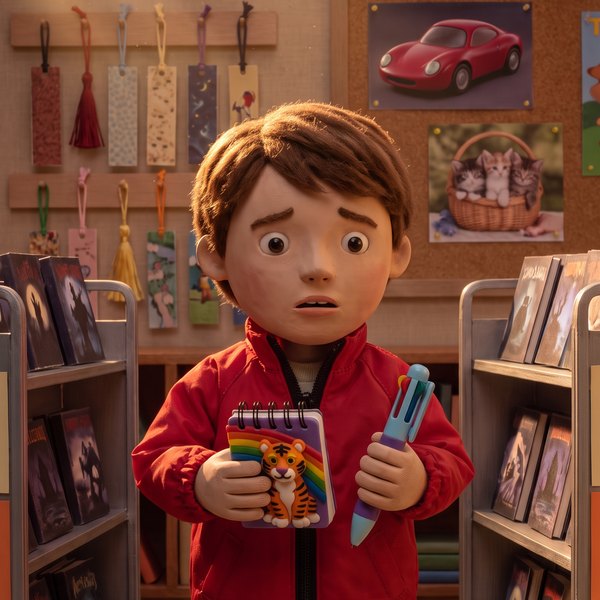
Lisa Frank notebooks put rainbow animals on school supplies you normally bought in plain colors. Novelty erasers offered the chance to make mistakes and correct them with a tiny object shaped like something else. There were pogs, snap bracelets, colorful pens and bookmarks with tassels that seemed far more sophisticated than folding down a page.
Lisa Frank didn’t settle for a normal-looking animal. The tiger needed to be purple. There needed to be a rainbow behind it and probably another rainbow somewhere else. Beside that notebook, the plain blue one in your backpack looked like something issued by the government.
You clicked each little lever to see what color came out. Blue and black were practical. Green and purple seemed necessary for reasons you could figure out later. Having all of them in one pen felt like getting away with something.
A bookmark could require serious deliberation. Which picture? Which tassel? Which one looked best sticking out of a book you weren’t sure you could still afford?
Then there were the posters. A cherry-red Ferrari. Michael Jordan defying gravity. Kittens arranged under the word “Friends.” The book about sedimentary rocks faced some serious competition.
You could turn toward one display and forget the previous one completely. A friend waved you over. Someone found something on the other side of the room. You went to see it, carrying an item you still might put back.
The books could wait another minute.
Goosebumps Was Right There
Of course, the books made putting everything else back difficult too.
Goosebumps covers looked excellent lined up together. A joke book promised material you could use immediately. Animal books offered photographs worth stopping for. A familiar series gave you somewhere to go next, while a strange cover could pull you toward something you never considered reading.
You could pick up a book because it looked good. Flip it over. Read a few lines. Check how long it was. Decide the cover was enough.
School usually supplied the reading and then asked questions about it. Here, choosing was your job. Nobody handed out a worksheet asking what the haunted mask symbolized. You wanted to know what happened when someone put it on.
Sometimes you found the next book in a series and knew exactly what to buy. Sometimes the book you circled on the flyer looked less exciting beside another one.
The flyer couldn’t account for the whole room. It certainly couldn’t account for the poster you kept glancing at while pretending to make a sensible decision.
The Money Was Yours Until It Ran Out
A few dollars felt substantial on the way to school. Inside the fair, they developed limits.
You checked a price, counted what you brought and checked another price. The book fit the budget. The book and the pen might fit. Adding the bookmark required a different arrangement, possibly involving no book.
A parent wasn’t standing beside every display to say there were already pens at home. The volunteer at the register would sell you a pen. You just needed enough money.
Friends weren’t always helpful. Someone showed up with a purchase you didn’t notice. Someone else seemed able to buy everything. You reconsidered your choices while trying to remember whether the notebook on the first table cost more or less than the one in your hand.
Not every kid got spending money, and the difference was visible. Browsing didn’t always end with a bag. Watching classmates buy things could make the room feel different.
But when you could buy something, even something small, you got to make the decision. An animal-shaped eraser could beat a perfectly serviceable rectangle. Explaining that decision later was a separate problem.
Back to Class With Something New
Eventually, the teacher collected the class. There was always something left to look at.
Back in class, somebody started reading jokes aloud while you clicked through every color on your new pen. A rolled-up Ferrari kept sliding off your desk. The teacher wanted everyone’s attention, but there were purchases to inspect.
The animal eraser stayed clean as long as possible. There was a regular one for actual mistakes.
Then you got home and told your parents there weren’t any books. At the book fair.
The Ferrari went up with tape at the corners. It kept trying to roll itself back up, so you added more tape. Getting it straight took a few attempts. Then you stood back to look at it, which was considerably more satisfying than explaining what happened to the book money.
The Fair Is Still There
Scholastic book fairs still arrive at schools. The cases open, children browse and families send money. There’s even an eWallet now, so a child can shop without keeping track of folded bills and loose change.
Go back to a school book fair years later—maybe with a kid of your own—and you start looking for the other things. Where are the posters? Where’s the little display that could consume the rest of the money?
At a fair stocked only with books, the answer is simple: they aren’t there. There are good books to choose from. The children find things they want. But someone remembering the old experience can finish browsing much sooner than expected.
Some fairs still sell posters and novelty supplies. The selection isn’t the same everywhere. Still, walking into a book-only fair makes it clear how much space those extras occupy in the memory.
The rainbow notebooks, the kittens and the unnecessary pens gave you reasons to wander. A room full of books can be wonderful. It can also feel surprisingly straightforward when you remember a room that tempted you from every direction.
What Came Home
The poster eventually stopped curling. The notebook acquired a few important pages, then some less important ones. The fancy eraser got dirty or disappeared. Goosebumps might stay beside the bed until you finished it and started looking for another.
Years later, the purchases blur together. A particular cover stays sharp. So does a tassel, a car, a rainbow tiger. You might remember something you wanted more clearly than something you bought.
It’s easy to picture another lap around those tables. Checking one more rack. Finding a friend to show them something. Reaching into a pocket to make sure the money was still there.
Those cases would close again. The library would go back to being the library. For a little while, though, there was a whole room of things to want, and you got to decide what came home.