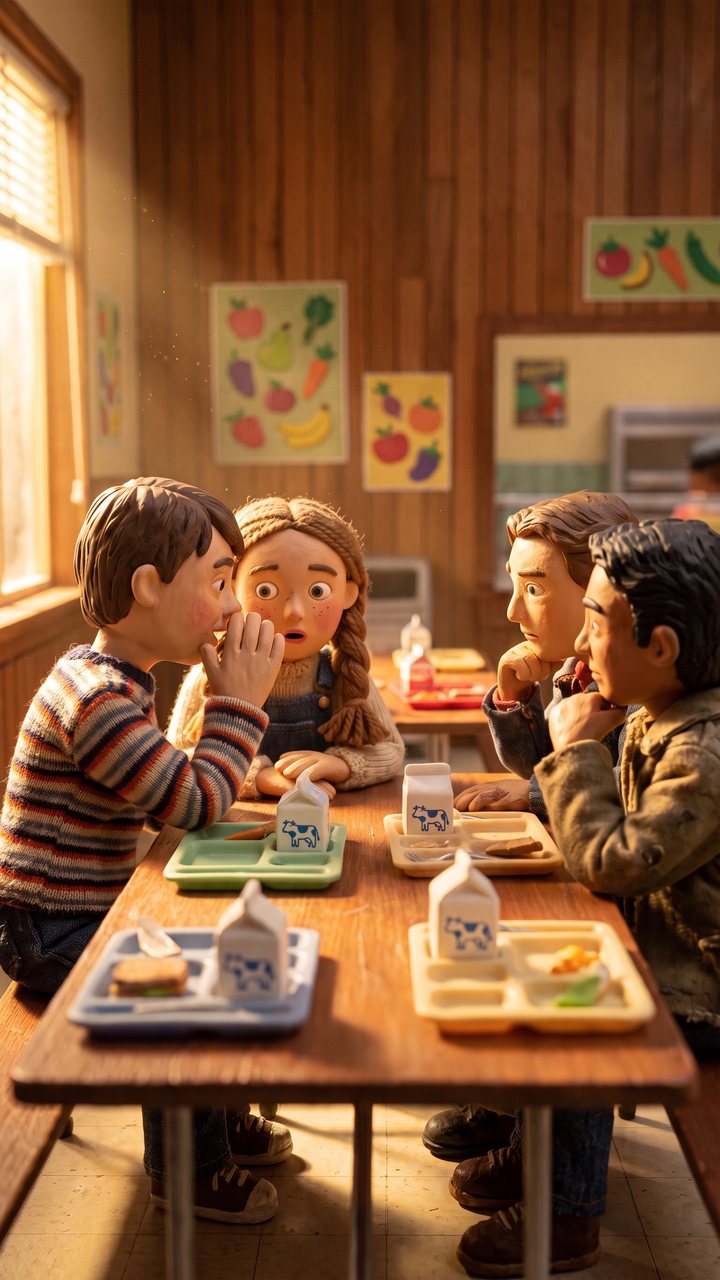
Somebody at your school knew the Marilyn Manson rumor.
Probably several people. Possibly everybody at your lunch table. Mention his name, give the person beside you a look, and the conversation could begin halfway through. Nobody needed the explanation again.
The strange part was how far beyond your school that recognition went. Kids growing up on opposite coasts knew the same story. Different schools, different radio stations, different people telling it with the same confidence.
There was no original post to point to. No share count showing its progress across the country. By the time it reached you, it sounded like something everybody already knew.
And you probably passed it along without asking how it got there.
The Story Was Bigger Than Your School
At eleven, the people you saw every day could feel like the entire audience. A story went around your classroom, reached the bus and showed up again at lunch. You could watch that much of its journey.
What you couldn’t see was the same conversation happening somewhere else.
Nobody at your table needed to know a kid in California. A story could leave school in somebody’s backpack, turn up at practice and go home with someone else. Family visits, summer camps and the internet gave it more places to go.
A summer camp or a family trip could introduce you to someone who knew the same rumor. You expected to tell them something outrageous. Instead, they interrupted because they already knew it.
That could make the story seem more credible. How could somebody from that far away know about it unless there was something to it?
“You heard that too?” could settle more than it should.
You could know the Manson story without knowing a single song. His name came up, somebody gave you that look, and you knew what they meant.
Knowing it gave you something to contribute. You could lean across the table and briefly become the most interesting person there. The better the reaction, the more tempting it was to tell it again.
Details could change along the way. One kid insisted on a slightly different version. Another corrected him. The argument became about getting the story right, with everybody taking its truth for granted.
By the third telling, you could forget that none of the people telling it actually knew.
Forward This to Everyone You Know
Some stories came with paper.
A photocopy folded into a backpack. A chain letter demanding more copies. A warning that looked official because somebody typed it instead of writing it in pencil.
Then email gave that material another way through the house. An adult received a message at work, printed it and brought it home. A teenager forwarded something to friends. Someone read it over a shoulder and repeated the interesting part at school.
An email promised that Bill Gates would pay you to forward it. Microsoft was supposedly testing some kind of tracking system. Send it to enough people, and a check would follow.
Other messages threatened bad luck if you didn’t forward them to seven people. Sometimes there was a deadline, because apparently whatever controlled your luck also kept office hours.
You didn’t have to believe any of it completely. Forwarding took a few seconds. Deleting it meant deciding how certain you were.
“Probably fake, but just in case” was enough to keep it moving.
The original message could disappear while the story kept going. Nobody needed the attachment once they remembered the punch line or the warning.
Early websites and message boards added more places to find something worth passing along. You could copy a link, write down an address or call a friend over to the monitor.
That last option came with its own small ceremony. Someone yelled for you to come look. You stood behind their chair. The page loaded slowly enough for them to insist it was worth waiting for.
Occasionally, it was.
Jeff Goldblum Left the Computer
In the early 2000s, a picture of Jeff Goldblum made its way from a website to the wall of a bathroom stall.
If you know the one, that’s probably enough explanation.
Someone downloaded it, printed it and found a place to tape it up. Everyone who encountered it after that could get the joke without visiting the website.
Then somebody else wanted a copy.
There was no share button on the wall. You could still pass it along.
Someone Still Chose What Got Bigger
There wasn’t a personalized social feed deciding which joke appeared next while you sat on the bus. Much of the sorting happened through people you knew.
Your friend selected the story. Your sister selected the website. Someone decided which email deserved forwarding and which picture deserved printing.
Other people had bigger distribution. A television producer could put an oddity in front of millions. A magazine could repeat a story. A popular website could send visitors toward a smaller one.
Something could circulate for months before a television show picked it up. Then people who never saw the website could bring it up at work the next morning. The person who found it first could complain that it was old.
Friends still send things they think will make you laugh. Now the platform has suggestions too. A clip appears between two things you chose to watch. A promoted post reaches people who never asked for it. By lunchtime, something you never heard of yesterday can seem impossible to avoid.
You can watch the numbers climb now. Back then, you usually discovered the reach by finding another person who already knew.
Everybody Remembered It That Way
Ask someone to picture the Monopoly Man. The top hat is there. So is the mustache. Some people add a monocle.
Then there’s the cornucopia behind the fruit on the Fruit of the Loom label.
You might remember it more clearly than the shirt itself. The little woven basket, the fruit spilling out. Something you barely thought about until somebody told you it was never there.
That’s when you start asking other people.
They remember it too.
Finding that agreement is part of the appeal of the Mandela effect. You aren’t just defending a hazy detail by yourself anymore. Someone else can describe the thing you remember without needing much help.
Then the company says no. The archives say no. The fact-check says no.
You can look at the evidence and still feel like somebody’s correcting a piece of your own childhood.
You weren’t studying the label. You were pulling on a shirt before school. That’s part of what makes the correction so strange. Nobody asked you to memorize it, and there was no reason to invent a basket. It just seemed to be there all along.
Researchers studying visual memory found that people can make the same specific mistakes about familiar characters and images. A shared memory can be wrong. It can also feel considerably harder to dismiss once you discover how many people share it.
The explanation makes sense. The missing basket still bothers you.
If everybody remembers the same thing, who gets to settle what happened? The people remembering it, or the people keeping the record?
Agreement doesn’t establish that the cornucopia existed. But an official correction doesn’t make the memory disappear, either. You can accept what the company says and still find yourself looking for an old shirt.
Just to check.
You Can Still Remember Who Told You
Eventually, you find out the rumor wasn’t true.
That doesn’t erase the lunch table. You can still picture the kid leaning closer, the lowered voice and the look that meant this was going to be good.
The story could travel across the country and still arrive as a conversation with the person sitting across from you.
Finding the correction years later can bring that whole afternoon back.
And before the bell rang, you probably knew who you were going to tell next.