
There was a sentence every kid knew how to say.
“Hi, is Matt there?”
You didn’t call Matt. You called Matt’s house.
Maybe his mom answered, or his dad, or his little brother picked up and screamed Matt’s name directly into the receiver. Whoever answered became the intermediary between you and the person you were trying to reach.
Sometimes you gave the nickname everyone called him at school and discovered his mother had no idea who you were talking about.
“No, nobody by that name lives here.”
Click.
Calling a friend required getting through the household first.
Getting Through Wasn’t Guaranteed
Even if Matt was home, that didn’t mean you were going to talk to him.
Someone’s older sister could be tying up the phone. Someone could be online, tying up the phone line. Call waiting existed, but plenty of houses didn’t have it. You could call and get nothing but a busy signal, so you tried again later.
If nobody answered, there was the answering machine.
Answering machines made sense for adults. Work could call. The dentist could leave a reminder. Grandma could leave a message while everyone was out.
They were considerably less useful when you were 13.
You could leave a message, but that meant recording your voice onto a machine sitting in somebody else’s kitchen where the entire family could hear it.
Plenty of calls ended at the beep.
You Knew the Numbers That Mattered
Of course, first you had to know the number.
Not all of them. There were only so many seven-digit combinations you were willing to commit to memory. But your best friends’ numbers were just there, as automatic as your own.
Everyone else lived in an address book, on a piece of paper near the phone or eventually in the speed dial.
There was a kind of accidental hierarchy to it. Family, best friends, the person you were calling a little too often.
Years before MySpace turned your Top 8 into a public declaration, you already had one in your head.
You just knew their phone numbers.
You Could Miss People on Purpose
The phone rang and your mom answered.
She covered the receiver. “It’s Matt.”
You looked up from whatever you were doing and waved both hands. No. No. No.
“Sorry, he’s not here right now.”
And somehow, that worked.
Once your mom said you weren’t home, there was no way to know where you were. You could be walking into spiderwebs for all Matt knew.
Adults had the same arrangement. Someone could leave a message asking for a callback, and you could decide when to call back. Or forget. Or decide not to.
Not answering the phone was a perfectly acceptable way to be unavailable.
Nobody Knew Exactly Where You Were
When you left the house, you left the phone behind.
Your parents might know where you said you were going. Your friends might have a general idea. But nobody could pull out a phone and watch your location move around a map.
If somebody needed to find you, they started guessing.
“Is Matt there?”
“No, I think he went to Chris’s.”
So you called Chris’s house.
“He was here, but they left.”
Where did they go?
Nobody knew.
You could spend an afternoon being one house ahead of the person trying to find you. You were simply out.
Plans Had to Survive on Their Own
“Meet at the mall at seven.”
At some point everyone left their houses, and the communication stopped.
If you were running late, everyone else probably didn’t know it. If the restaurant changed after someone left, good luck telling them.
You went where you said you were going and looked for each other.
If somebody was late, you waited. Eventually you started wondering whether you got the time wrong or whether they were coming at all.
Privacy Was Somehow More Public
Talking on the phone offered very little privacy.
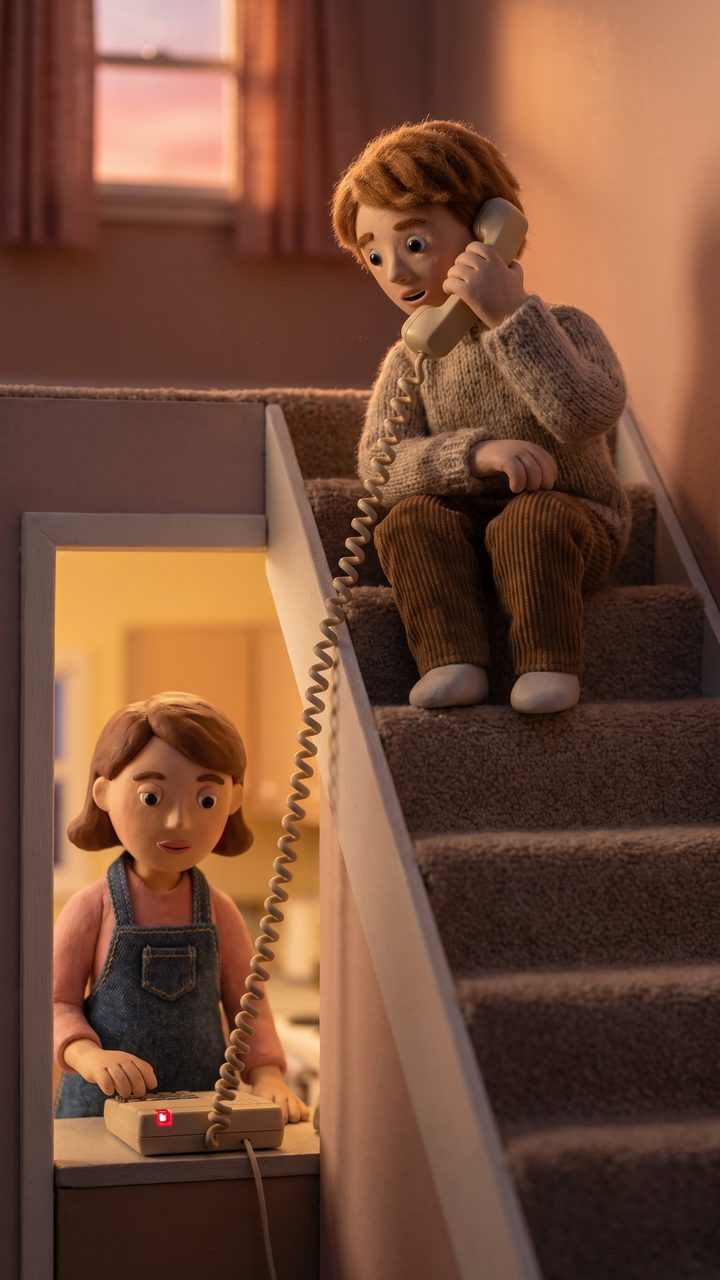
The phone was usually attached to a wall or sitting on a table in a shared part of the house. If you were lucky, it had one of those absurdly long coiled cords that let you stretch it around a corner, into a hallway or halfway up the stairs.
You might lower your voice until someone walked past, wait for them to leave, then keep talking.
There was always the possibility of hearing another receiver click somewhere in the house.
“GET OFF THE PHONE.”
Everyone knew who called. Everyone could hear you talking. Anyone with access to another phone in the house could pick it up and listen.
Your friends became familiar voices in the house, too. Parents knew who called all the time. Siblings recognized names. You might know a friend’s mom mostly because you spent years asking her to hand the phone over. None of this was particularly important at the time. It was just what happened when everyone in a family shared the same number.
Caller ID eventually gave you some warning about who was on the other end, and call waiting made it harder to miss another call. But the phone still belonged to the house.
Then the Number Belonged to You
Eventually, everyone got their own number.
You didn’t call a house and ask for Matt anymore. You called Matt. Then you texted him.
That solved plenty of real problems. Parents could reach their kids, friends could find each other and plans could change on the fly. Nobody had to make awkward conversation with someone’s dad just to ask if his kid was home.
But being unavailable also became harder to explain.
An unanswered house phone didn’t tell you much. Maybe nobody was home. Maybe they were outside. Maybe they heard it ring and didn’t feel like answering.
Now we carry the phone with us, and we can reach almost anyone almost anywhere. That’s enormously useful. It also eliminated the perfectly ordinary possibility that somebody simply couldn’t be reached.
There was a time when knowing someone’s phone number didn’t mean you could reach them.
It meant you knew where to try.